PROVISIONAL DRAFT SUBJECT TO CHANGE


The Local and the Small-Scale: Sanctuary Site for International Idealism
Study of the archival record of the formal, institutionalized idealism within sporting organizations, is often deeply dispiriting. Professions around equality, solidarity, and peace have only rarely been met with substance. Activist endeavours did win success, episodically, but often after prolonged and personally costly struggle. Grand professions of moralism and virtues that beyond mere contests of physiological merit rarely seemed to be demonstrated in substance. In key respects, the grand picture invites cynicism.
Sporting institutions and organizations have frequently proven less than ideal custodian of its idealism. Yet the content of that idealism, in small ways, has flourished. The audience held a kind of vernacular faith with their own sense of sporting idealism, and the wider constellation of attached virtues: a distributed, resilient, individual, reservoir of faiths.
Much as Turtle Bay, Paris, and Geneva soon disappointed a generation of rights, peace, and environmental activists that coalesced first around the League of Nations, and then around the UN, formalized, institutionalized idealism was perilous to ideals.
Paradoxically, one of the few reliable sanctuary sites for international sporting ideals is expression in the everyday.

Exploring Global Sporting Idealism
Study into effective mechanisms for advancing the study and appreciation of sport and global moralism informed by history were, in the intra- and post-acute pandemic phases, were guided by the May 2020 IOC Olympic Agenda, 2020 + 5, which set out the vision for Olympism as it began to navigate a deeply unsettled global environment. Its prologue specifically identified trends around ‘solidarity’ and ‘digitalization’ as key structuring priorities.
IOC, Olympic Agenda 2020+5, May 2020, and formally adopted, 12 May 2021.
Context and Purpose
The immediate circumstances that compelled more intensive exploration of novel approaches to digital research and engagement were those of 2020 and 2021, and the exceptional public health restrictions that accompanied the COVID-19 pandemic in Melbourne. Teaching in this context revealed some of the limits of videoconferencing and conventional PowerPoint, particularly when it came to the examination of memorialization and space. This was especially so as the emergency persisted, and the burst of improvisation and novelty fell into a steady state - with attendant weariness from staff and students. The stunning months of protest that followed the murder of George Floyd placed memorials, and public space, at the centre of public interest. A very obvious avenue, assessing and contextualizing Victorian spatial heritage, and its politics, was foreclosed - precisely at the moment when it was most salient.
Initial source image acquisition was necessarily restricted to those sites and spaces that could be pursued within one hour total transit and photo / video capture while on foot, within a 5,000m radius. Given the restricted time window, multiple cameras were used simultaneously, trying to capture as many photos as possible within the time allowed within the emergency regulations. While this did pose immense challenges, a number of representative memorials were within the radius, and formed the basis for several very successful tests, presented at the FaVer Conference in October 2020. Major shortages of graphics hardware across 2020-2022 demanded further improvisation again - and older hardware was acquired, and intensive computer processing split across multiple obsolete machines, as opposed to modern high performance equipment.
This strategy was complemented by outreach to local communities around the world, seeking suitable imagery of notable monuments in their regions. Foremost amongst these was the striking memorial to John Humphrey, located in Winnipeg, Canada. Humphrey was perhaps the figure single most responsible for the successful adoption of the 1948 Universal Declaration, foundation of the post-war human rights system.
Transcending the JPEG on a Slide: Object and Spatial Capture for Historians?
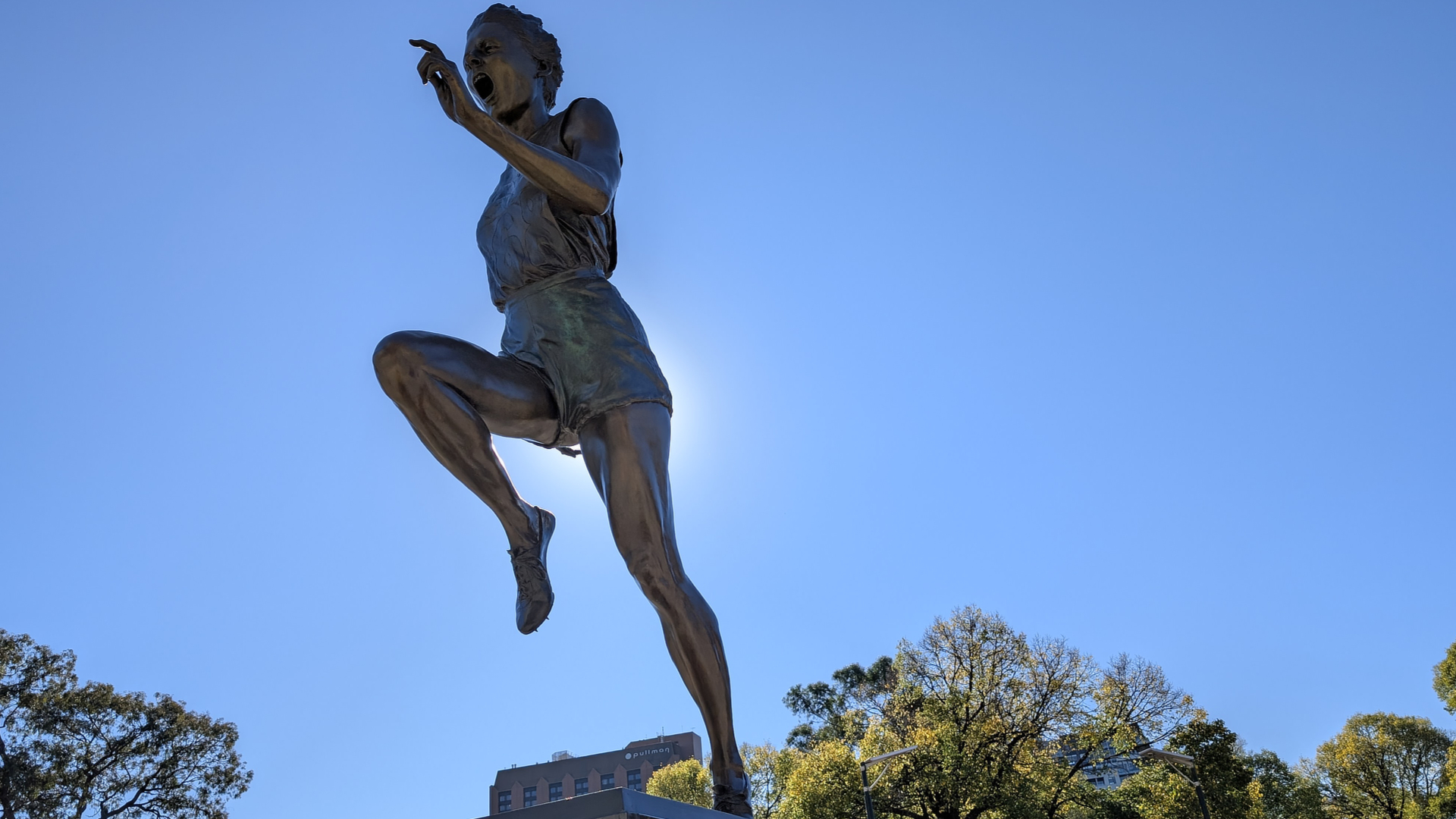
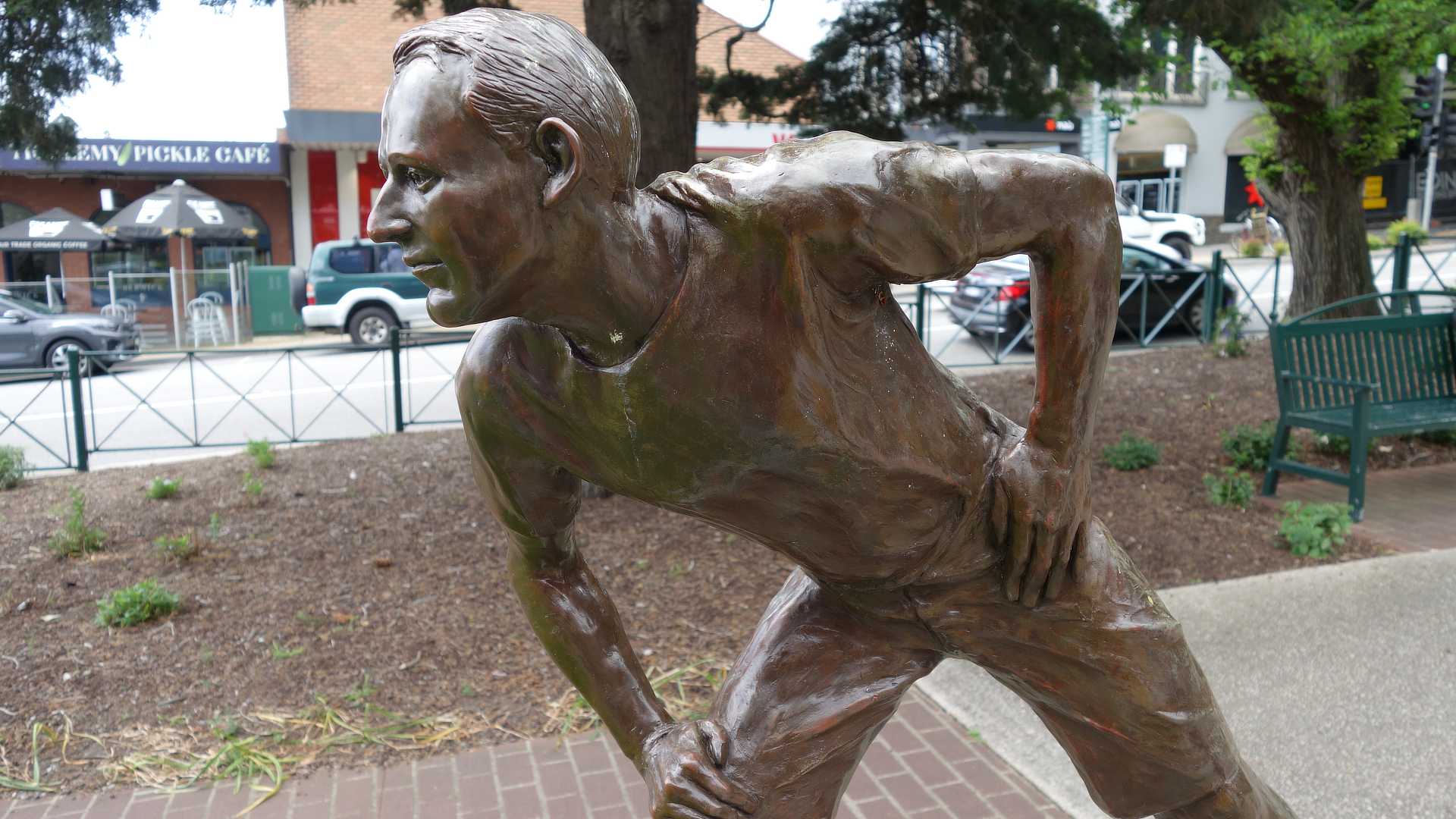
A transient window of relaxed restrictions in May 2021 afforded the opportunity to capture one of the flagship monuments - the statue of Peter Norman, 200m silver medalist at the 1968 Mexico City Games. Norman's solidarity with the 'Salute' protest of Tommie Smith and John Carlos would be recorded in the iconic photo of the podium, and, in 2012, recognised by the Federal Parliament. When integrated into an ongoing research project on the moral claims of major events, and of sport, the statue was a striking exhibit of the ways in which sporting moralism is inscribed and communicated via space - and an example which could be studied despite closed archives and shut borders.
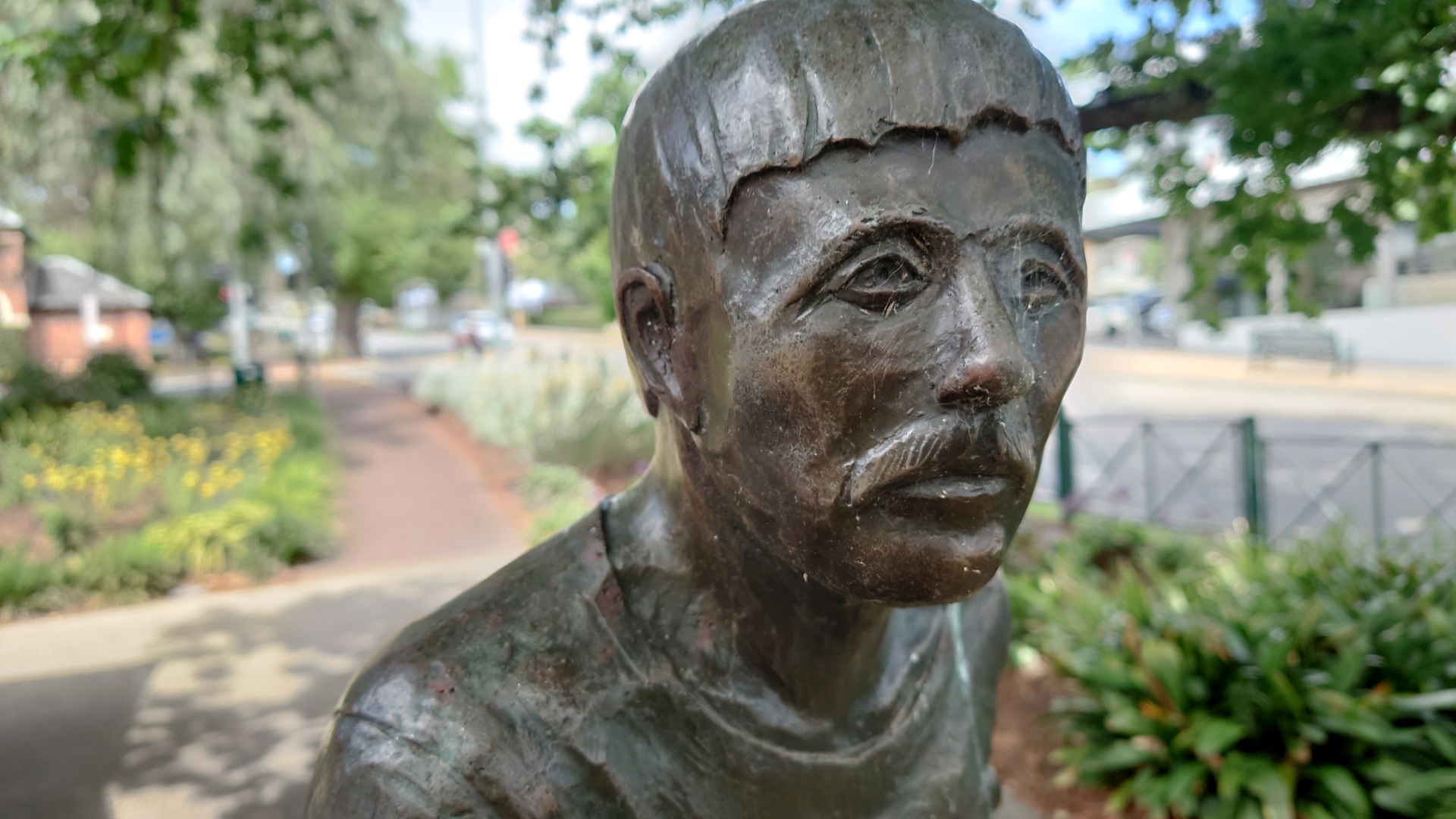
Once the restrictions fully receded, space and monument capture became an avenue to revisit a city which was curiously defamiliarized. Sorties to document the political and attitudinal landscape of the state were promptly undertaken - in Melbourne's Olympic Precinct, its notable buildings and arts centres, its arboreal heritage, its over-abundant memorials to war and empire, and the slowly growing set of commemorations of social movements and historical injustices. Over 100 3d captures were prepared across 2021-2023, as fluency and confidence with the various techniques matured. Highly novel computer graphics innovations, those of neural radiance fields, and Gaussian Splatting, were applied to the data sets, allowing for more faithful recreation.


Melbourne Olympic Mural, 1956 as encountered in 2024. Image: R. Burke
Aspects of this research supported by DP170100291